A source-labelled ReStory Chill Electronics Repairs characters guide covering the two public customer examples, route notes and evidence limits.
Steam confirms the setting, customer stories and branching choices. It does not publish every character name, route condition or ending total. Entries marked open need a current-build reproduction before they can be treated as confirmed.
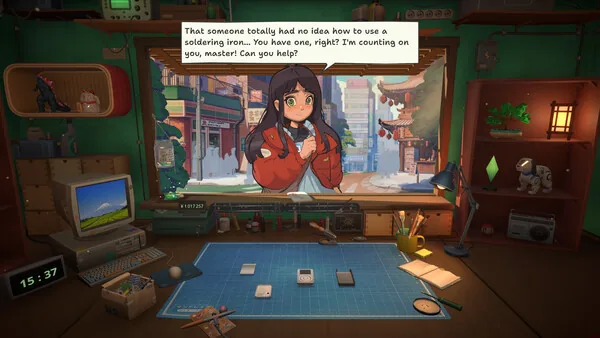
01Official Steam screenshot: a character clue arrives through the customer conversation, not only through the device shell.
Short answer: people looking up ReStory Chill Electronics Repairs characters can verify two public customer examples, but there is no complete cast list or verified character-to-ending chart. This page keeps the former gangster's phone and the lovestruck student as separate, source-labelled entries, then shows how to record a customer story without turning a third-party spoiler into a fact. Use the Customers page for your own dialogue log and the Endings page for route evidence; this index is the quick place to understand who a story clue belongs to.
01 / Scope
What counts as a character on this page
A character lookup sounds simple until a game mixes a repair job, a customer conversation and a branching story in the same hand-in. ReStory's official store description presents customers as people with unique stories, choices that can affect their lives and a replayable story with multiple endings. That is enough to establish a narrative cast exists, but it is not enough to invent a complete list of names or assign every customer to a final route.
This page therefore treats a public example as a character entry only when the checked source describes the person or the story situation. A label such as the former gangster's phone describes the official example without pretending that the customer's personal name is known. The same rule applies to the lovestruck student. The entry tells you what the source supports, what you should record in your own run and which conclusion is still open.
The distinction matters for searchers. Someone looking for ReStory characters usually wants a fast cast or story index. Someone looking for a customer choice wants a decision log. Someone looking for endings wants a route map. Those are connected questions, but they should not be collapsed into one page with repeated spoiler claims.
02 / Official example
The former gangster's phone
Official Steam example
Steam uses a former gangster's phone as one example of the kind of customer story you can encounter. The important fact is the disturbing find inside the phone, not a hidden promise that the store page contains a full solution. The device clue and the narrative clue are deliberately connected: you need to repair an object while also deciding what the conversation means for the person who brought it in.
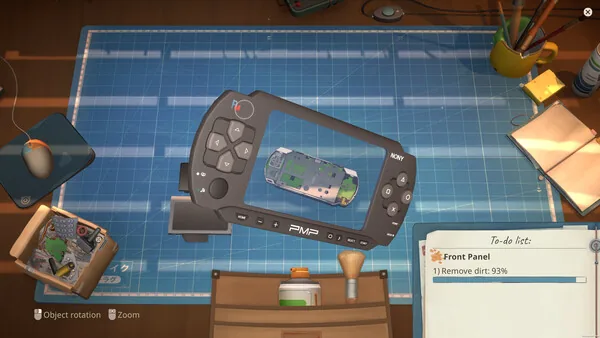
For a clean route note, record the customer label, the device condition when it arrives, the repair phase when the conversation appears, the exact response you choose and the immediate result. A screenshot of the final dialogue without the starting state cannot prove that a route is fixed. If a later update changes the scene, the version or date in your note will make the report useful instead of anecdotal.
Do not turn the example into an invented name, a guaranteed ending or a moral answer key. The official description confirms the situation and the existence of choices; it does not publish the complete dialogue tree. Until a player can reproduce a result from an identified save, keep the route status open and link back to the customer tracker.
02Official Steam screenshot: the repair state belongs in the same note as the character or customer clue.
03 / Official example
The lovestruck student
Official Steam example
The second public example is a lovestruck student who may need help confessing to a crush. This example shows why a ReStory character page cannot be reduced to a hardware parts list. The repair is still a practical job, yet the conversation gives the player a human context and a decision that can carry into the branching storyline.
The safest way to use the clue is to separate three layers in your notes. First, write the physical repair state: what the device is, what you inspected and whether the job is complete. Second, copy the customer story or dialogue choice exactly as it appears. Third, record only the visible result you observed. This keeps an experience report honest when another player sees a different option order, build or later branch.
A character guide should help you find that context quickly without claiming more than the source proves. The page can say that Steam presents a student and a confession choice. It cannot say which response always produces a particular ending until the same sequence has been tested more than once.
04 / Method
How to read a ReStory customer story
Treat the character clue as part of the job intake. Read it once for urgency and story context, then read it again for the device symptom. Before you click a response, confirm whether the repair is clean, incomplete or waiting on a part. That small separation prevents a later route difference from being blamed on dialogue when the underlying job was not in the same state.
The record does not need to be long. A useful five-line note has the customer label, device family, repair state, exact choice and visible result. Add the game version or date and a save label when the choice feels important. On a replay, change one variable at a time. If the result changes, mark the entry as awaiting reproduction rather than choosing the cleaner explanation.
Use the Customers page to keep the checklist in the browser, then use the Endings page to compare route evidence. The repair guide remains the right place for the physical sequence, while the achievements pages own unlock conditions. Linking those pages makes the character index useful without copying their content.
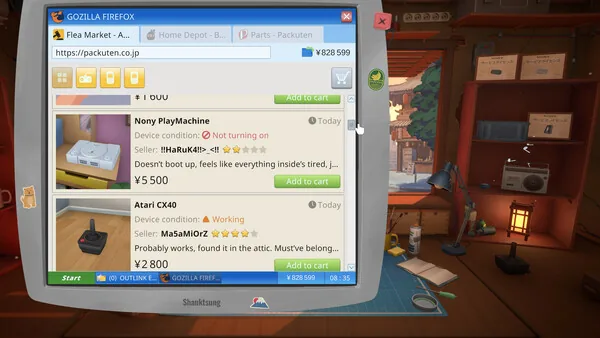
03Official Steam screenshot: shop work, parts research and customer stories share one route record.
05 / Page boundaries
Characters, customers and endings are different pages
The word character is broader than customer. It can include the person who brings a device to the shop, a story contact mentioned in a conversation or a role described by the official store page. The current public material checked for this site gives two concrete customer examples. It does not give enough evidence for a complete named roster, so this page keeps the index intentionally small and expandable.
The Customers page answers a different question: what clue and dialogue context should you log for a known customer record? The Endings page answers whether the source confirms branching and what route evidence is still missing. A link between them is more honest than copying a guessed character-to-ending table here. If a later first-party update publishes names, the character entry can grow while the evidence label changes with it.
This separation also protects the search experience. A reader arriving from the characters query gets a readable index first. A reader ready to make a choice gets a checklist. A reader comparing outcomes gets a route tracker. Each page has one job, and the links explain the next job instead of forcing every query into a single long spoiler article.
06 / Accuracy
How this index stays accurate
The evidence boundary is simple: official Steam facts are labelled official, workflow advice is labelled editorial, and an untested claim stays open. Search snippets, forum memories and a single screenshot can point to a useful lead, but they are not enough to promote a route condition to a fact. The same standard applies to names that appear in third-party guides but not in the first-party material checked for this page.
When you submit an update, include the version or date, customer clue, device state, exact choice sequence and visible result. Remove personal information from screenshots. A second run from a comparable save is stronger than a longer explanation of one run. If the result cannot be repeated, the page should preserve the uncertainty so another player knows what still needs testing.
This page is intentionally current-build cautious. ReStory launched on Steam on 6 August 2026, and early guides can change as players discover more routes. The last-reviewed date is shown in the footer; the route status in each entry should be updated alongside the evidence, not silently replaced by a stronger claim.
07
Character and evidence quick reference
Entry
Story role
What the source confirms
What still needs proof
Former gangster's phone
Customer story around a disturbing discovery
Steam uses the phone and its discovery as an example.
Customer name, exact dialogue tree and route outcome.
Lovestruck student
Customer story around a confession choice
Steam describes the choice to help the student confess.
Exact response mapping and ending impact.
Other characters
Future community or first-party entries
The official description establishes unique customer stories.
Names and repeatable current-build evidence.
08
ReStory characters FAQ
Does ReStory have a complete character list?
Not in the official material checked for this page. Steam confirms unique customer stories and gives two public examples, but it does not publish a complete named roster. This index stays limited to source-labelled entries until more names are reproduced.
Who is the former gangster's phone character?
It is an official Steam example describing a disturbing discovery inside a customer's phone. The store page does not provide a personal name or a complete route solution, so this site keeps the label descriptive and links to the customer log.
Is the lovestruck student a confirmed ReStory character?
Yes, as a story example in Steam's public description. The source confirms the student and the confession choice, but not every dialogue option or its exact ending effect.
Where should I record a character choice?
Use the Customers page for the clue, repair state and exact response, then compare the result in the Endings tracker. Save the game version or date when the choice may affect a later route.
Why are some ReStory character names missing?
The checked first-party material does not publish a full name list. Omitting an unverified name is safer than copying a third-party claim and presenting it as an official route fact.
09
Characters
Sources
Steam's official store description is the primary source for the two customer-story examples and the branching-story premise. Exact names, route conditions and ending effects remain open until a current-build result is reproducible.