The safest ReStory first job walkthrough is a repeatable order, not a guessed part list. Read the hand-in twice, classify the device, inspect it before spending shop money, clean the safe surfaces, replace only the fault you can support, reassemble and test, then record the customer's choice. This page turns that opening shift into a seven-step checklist. It separates Steam-confirmed features from practical advice and leaves any item-specific solution open until it can be reproduced in the current build.
Read the request, identify the device family, inspect before buying, clean, diagnose, replace the supported fault, reassemble, test and log the dialogue. If the job fails, return to the last confirmed state and change one variable at a time.
02
Start with the hand-in, not the parts browser
The first job feels harder when every clue is treated as a shopping prompt. Read the customer's request once for the story and urgency, then read it again for the physical symptom. Write down the device type, the words that describe the failure, any visible damage and whether the customer mentions a deadline or personal context. That short intake note gives you a baseline before the repair animation changes the state.
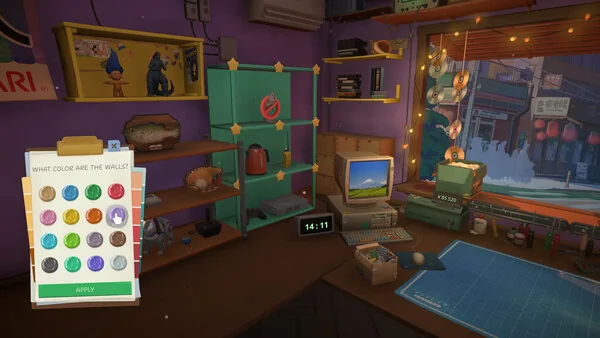
Steam's public description confirms the broad loop: you take nostalgic electronics apart, clean them, replace faulty parts and assemble them again. It also confirms a shop-management layer with customers, orders and choices. It does not publish a universal first-job item, a fixed payout, a timer or a score formula. Treat the opening job as a current-build observation and keep the exact solution separate from this general walkthrough.
- Copy the customer's exact wording instead of reducing it to a single symptom.
- Record the device family before opening the parts browser.
- Mark story context and hardware clues as separate notes.
- Keep a little cash available for a second fault instead of buying a full catalogue.
03
Seven-step ReStory first job walkthrough
Use the sequence below as a stable baseline. It is designed to make the first job explainable when something goes wrong. The order follows the public repair loop and adds a small record at each decision point. It is not a claim that every item has the same interaction name or that every hidden condition has been discovered.
A controlled order also protects your time. If you purchase before inspecting, or clean and replace at the same moment, a successful hand-in cannot tell you which action mattered. The first run is the best moment to build a note you can replay rather than a list of guesses you cannot audit.
1. Read the request twice
Separate the customer's story, urgency and requested outcome from the physical clue. Copy unusual wording into your job note before you open the device.
2. Classify the device
Start with the closest family: console, handheld, phone, camera, music player or home appliance. The family gives you a sensible inspection order when the item name is unfamiliar.
3. Open and inspect
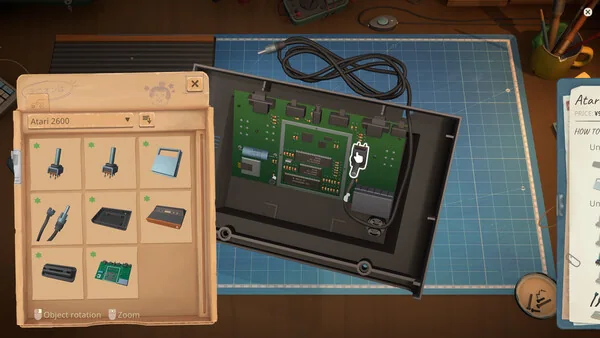
Expose the device and look for the failed area before ordering. Note the shell, board, display, battery, controls and audio signs that are actually visible in this job.
4. Clean as its own pass
Remove the dirt or oxidation that the current task lets you address, then observe the state again. Do not treat cleaning as proof that a module is healthy.
5. Name the supported fault
Compare the symptom with what you found. If the board is not confirmed, write that uncertainty down instead of buying the most expensive plausible part.
6. Replace and reassemble deliberately
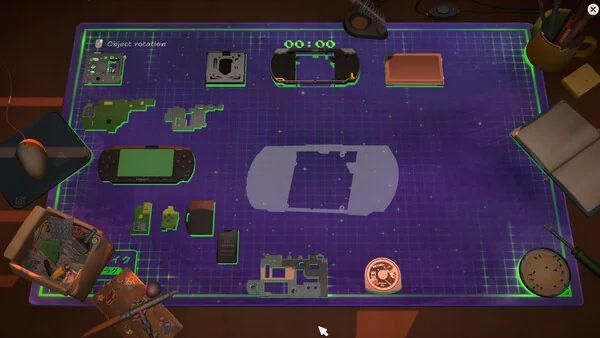
Order one supported part family, fit it, check visible connections and close the device in a deliberate order. Keep the purchased part in the record.
7. Test, hand in and log the choice
Run the available test, compare the result with the request and record the customer's response word for word. Save the route note before moving to a new job when possible.
04
Build a first-job diagnostic note
A useful first-job note is short enough to keep beside the game. Use six lines: device family, exact symptom, confirmed inspection, cleaning result, purchased part and final test. Add the customer's exact choice and the visible reaction on a seventh line. This record is more valuable than a long spoiler paragraph because it lets you compare two runs from a similar starting state.
The note also protects the boundary between fact and advice. A label such as “Steam confirms cleaning” describes a source-backed feature. A label such as “check the display before the battery” is a workflow suggestion. A label such as “this part always fixes the opening job” would require a reproducible current-build test and should stay out until you have one.
Write the starting state
Add the date or visible version, device family, customer clue and whether the job is untouched.
Mark each inspection
Use one line for shell, power, input, display, audio, battery and board observations; leave unknown fields open.
Record spending
Note the part family, shop cost and whether the purchase was based on evidence or a test.
Capture the result
Write the test outcome, hand-in reaction and dialogue choice without paraphrasing a route condition.
05
Avoid the mistakes that make the opening job feel harder
The most expensive first-job mistake is buying before opening the device. The parts browser is useful after you have a target; before that, it turns uncertainty into a bill. A second mistake is changing several things at once. If you clean, replace a board and choose a new reply in one attempt, a better result cannot identify the cause. Keep the repair state and story state visible in separate notes.
A third mistake is treating an official feature description as a hidden solution. Steam can confirm that customers have stories, choices can matter and multiple endings exist. It cannot confirm which first-job response earns a particular rating in your save. The correct answer to an unverified detail is a reproducible test, not a confident sentence copied from a different game.
- Do not order every part that could match a symptom.
- Do not call a clean shell proof that the board or battery is healthy.
- Do not change shop layout and dialogue at the same time when testing a review.
- Do not overwrite the exact customer wording with a memory of what it meant.
- Do not turn one community report into a guaranteed first-job rule.
06
When the job still fails, return to the last confirmed state
A failed hand-in is useful evidence if you can say what changed. Compare the request with the final test, then work backward: was the correct device family used, did the job still show an unfinished cleaning step, did the purchased part match the inspected fault, and was the device fully reassembled? Check one question at a time and keep the earlier note intact.
If the repair is accepted but the customer reaction differs, treat the conversation as a separate experiment. Record the save or route label, the exact response and the immediate result. Link to the Endings and Customers pages for route tracking, but do not label a choice as a guaranteed ending gate until the same state can be reproduced.
Compare the job state
Look for a task or component the game still marks incomplete before buying anything else.
Replay one repair variable
Keep the customer, device and starting money similar; change only the suspected cleaning, part or assembly step.
Replay one story variable
With the repair state stable, test one dialogue response and record the visible reaction separately.
Leave an open label
If the result does not repeat, mark it awaiting verification and send the version, sequence and outcome through the contact page.
07
Keep story choices separate from repair results
The opening job can teach two systems at once: electronics work and a customer story. Steam describes unique customer stories, choices that can affect lives and a replayable branching storyline with multiple endings. Those facts explain why a first job note should include dialogue, but they do not provide a public route map. Use the Customers page for the clue and exact response, then the Endings page for the evidence status.
This separation makes the walkthrough useful even when the game changes. A hardware observation can be checked against the current device. A story result needs a route, a starting state and a repeat. Keep both records, use the repair guide for the general sequence and use the achievement guide only for achievement evidence.
- Save or label the route before a meaningful response when the game allows it.
- Copy the exact choice, not only its moral summary.
- Record the immediate reaction separately from a later ending.
- Treat an unrepeatable result as a lead for testing, not a confirmed condition.
09
First-job record you can reuse
09
| Moment | Write down | Evidence label |
|---|---|---|
| Before opening | Customer wording, device family, urgency and starting money | Player record |
| After inspection | Visible fault, unknown fields and the first supported hypothesis | Current-build observation |
| After cleaning | What changed before any part was ordered | Current-build observation |
| After purchase | Part family, cost and reason for the order | Shop record |
| Before hand-in | Assembly state, test result and remaining task | Current-build observation |
| After dialogue | Exact response, reaction and route label | Repeatable route note |
10
The reliable first-job habit
10
11
ReStory first job FAQ
What is the best order for the first ReStory job?
Read the request, classify the device, inspect before buying, clean, identify the supported fault, replace one part family, reassemble, test and record the customer response.
Should I buy parts before opening the first device?
Usually no. Open and inspect first so the order is tied to a visible fault. Keep money available for a second issue instead of buying every plausible part.
Does this page give the exact first-job solution?
No. The public sources confirm the repair loop but do not publish a universal opening item, score or hidden part condition. This page gives a repeatable method and labels unknowns.
Can the first customer choice affect an ending?
Steam confirms a branching story and multiple endings, but it does not publish the exact route conditions. Record the choice and reproduce it before calling it a gate.
What should I record when the job fails?
Keep the customer, device family, exact symptom, inspection result, cleaning change, purchase, assembly state, test and response. Change one variable in the next attempt.
Where do I go for parts or ending details?
Use the Devices and Parts pages for inspection roles, Customers for dialogue notes and Endings for route evidence. The general Repair Guide owns the full repair loop.